
More Resources
Dive deeper into forest therapy, the magic and beauty of nature, mindfulness, and holistic wellbeing with these
curated books, articles, and research.
Handpicked reads to deepen connection with yourself and nature.
Books
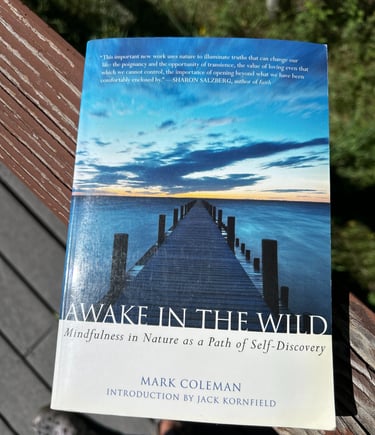
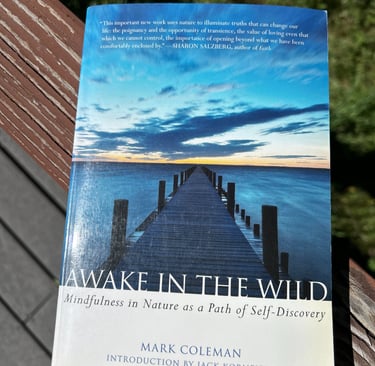
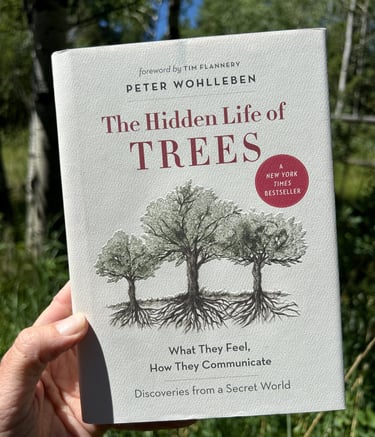
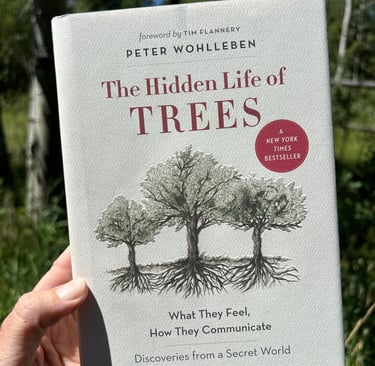
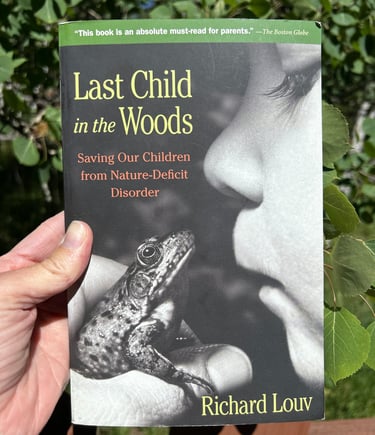


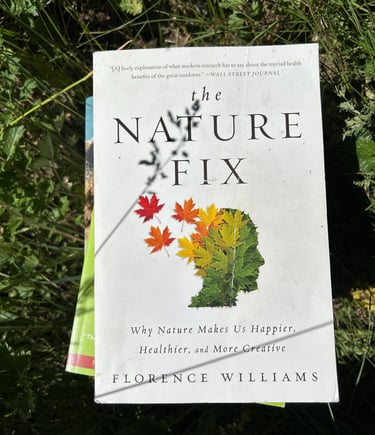
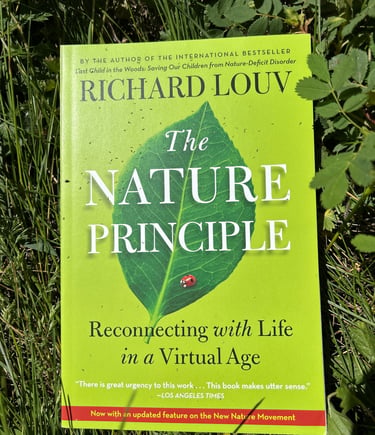
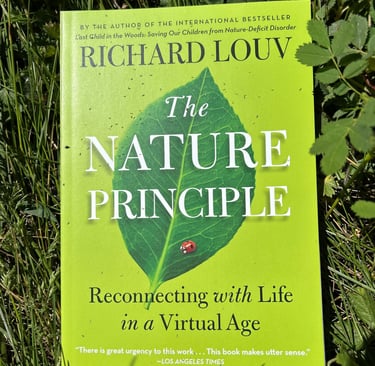
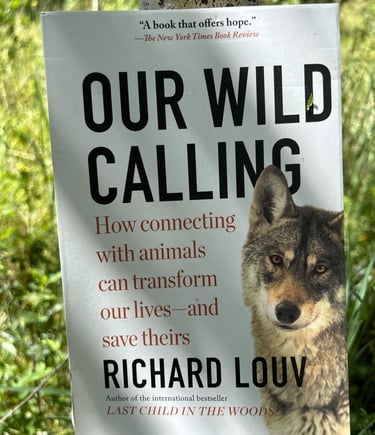
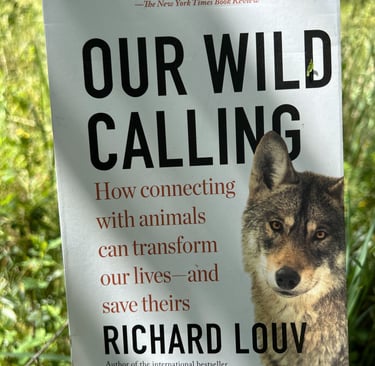
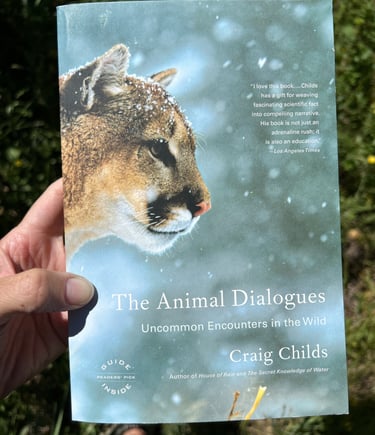
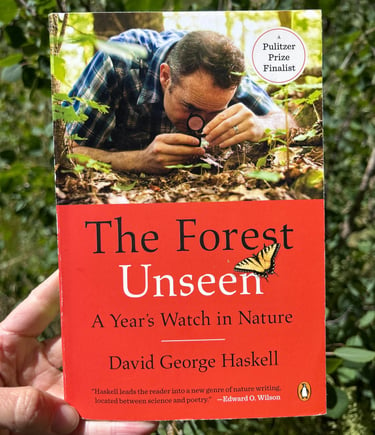
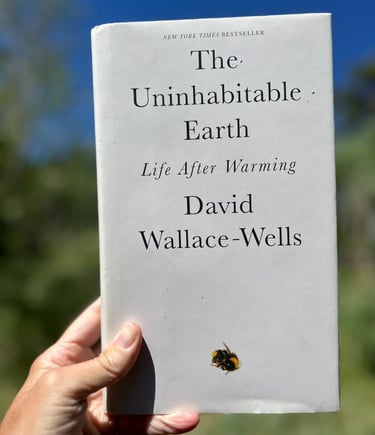
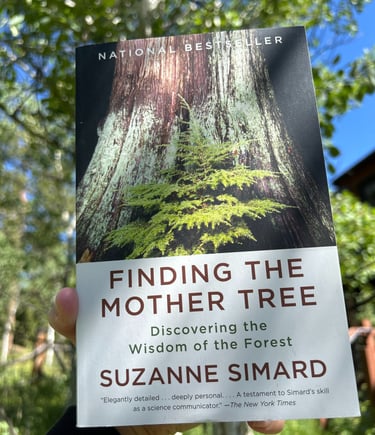
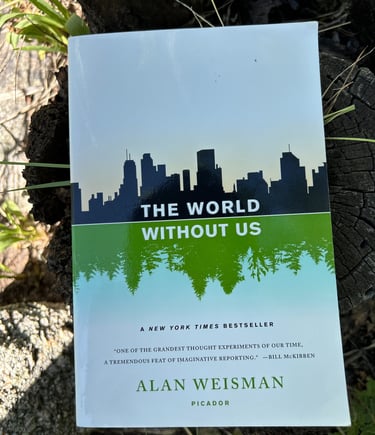
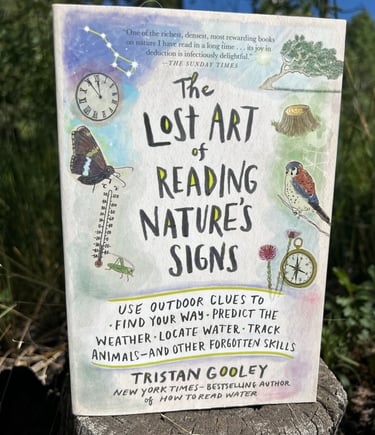




When you buy through these affiliate links, a portion of every sale goes directly to non-profit organizations dedicated to protecting and preserving wild lands.
Articles
Curated reads about forest therapy & wellness in nature.
You’ve heard of forest bathing. Now try forest therapy
This article highlights the global shift from general hiking to structured forest therapy, focusing on the emergence of certified, self-guided forest therapy trails around the world. It frames the practice as an accessible way for fast-paced urbanites to intentionally unplug, activate dormant sensory channels, and utilize mindfulness prompts (like "sit spots") to find profound emotional restoration.
This new travel trend combines wellness with wildlife
Exploring the intersection of luxury wellness travel and ecological connection, this article dives into how being in the presence of the wild shifts human neurology. It covers how hands-on conservation and mindful immersion in old-growth ecosystems trigger the brain's reward circuits, reducing stress while instantly fostering a lasting, primal sense of purpose.
Forest Bathing: What It Is and Its Potential Benefits
An approachable breakdown of Shinrin-yoku featuring clinical psychologists who explain the practice as a tangible tool to stop mental rumination. It explains how immersing the senses in a quiet, forested area gives the brain’s prefrontal cortex a chance to fully rest from the constant stimulation of modern devices and daily worries.
Forest bathing: What it is, its benefits, and how to try it
A highly practical guide outlining how an intentional nature immersion functions to soothe a frazzled nervous system. It offers realistic, everyday tips for engaging all five senses outdoors, finding moments of "awe" on simple neighborhood walks, and even capturing micro-doses of nature's therapeutic benefits while indoors.
Research
What scientists are confirming we always knew.
For city dwellers, even 15 minutes in nature can improve mental health
A study from Stanford University’s Natural Capital Project reveals that spending as little as 15 minutes in urban green spaces provides significant clinical benefits for depression and anxiety. Interestingly, the research notes that non-active, stationary time spent in greenspaces (such as sitting or mindful observation) is exceptionally effective at reducing negative mental health outcomes and restoring vital energy levels.
A connection to nature fuels well-being, new study finds
A massive international study spanning 75 countries and 38,000 participants confirmed that a deep emotional connection to nature is universally tied to higher human well-being. The data shows that individuals with a stronger bond to the natural world consistently exhibit greater resilience, higher baseline mindfulness, and a stronger sense of purpose and direction in life across all cultural backgrounds.
Effects of forest environment (Shinrin-yoku/Forest bathing) on health promotion and disease prevention —the Establishment of “Forest Medicine”—
Written by the pioneer of modern forest medicine, Dr. Qing Li, this landmark paper explores the exact biochemical mechanisms of Shinrin-yoku. It demonstrates how breathing in airborne plant chemicals (phytoncides) increases human Natural Killer (NK) cell activity—boosting the immune system for up to 30 days—while naturally lowering blood pressure by 7–8 mmHg.Is forest bathing a panacea for mental health problems? A narrative review
A comprehensive narrative review detailing how immersion in the forest suppresses sympathetic nervous activity (the "fight-or-flight" response) while boosting parasympathetic activity. The article highlights how forest bathing serves as an effective, non-pharmacological treatment for urban burnout, significantly dropping cortisol levels and stabilizing the nervous system.
Interactions with Nature, Good for the Mind and Body: A Narrative Review
A narrative review published by the National Institutes of Health explores the profound impact of intentional and passive nature interaction. It highlights landmark environmental psychology data showing that patients with even a simple visual window view of natural landscapes or trees experience shorter hospital stays, require significantly fewer doses of moderate-to-strong pain medications, and suffer fewer post-operative complications.
A rigorous meta-analysis of randomized controlled trials (RCTs) that confirms the physical and psychological impacts of structured forest therapy. It explicitly notes a verified, significant reduction in depression and anxiety scores for adults, grounding the practice firmly in evidence-based medicine.
Forest Bathing Benefits: How Nature Therapy Reduces Stress and Improves Health
An integrative medicine analysis outlining how sensory engagement with natural landscapes affects human physiology. It features data showing that as little as 17 to 20 minutes a day of mindful nature exposure serves as a powerful "reset button" for the human nervous system, altering brain wave patterns to promote deeper sleep and cognitive restoration.
Time spent in nature can boost physical and mental well-being
Harvard T.H. Chan School of Public Health outlines how green space exposure acts as a direct countermeasure to urban overstimulation. The review details the physiological mechanisms through which natural environments stimulate the senses gently—rather than aggressively—resulting in measurable mental restoration, lower blood pressure, improved sleep quality, and decreased rumination.
Associations between Nature Exposure and Health: A Review of the Evidence
This extensive clinical review analyzes the broad systemic pathways affected by nature exposure. The compiled data demonstrates cross-sectional evidence of enhanced cognitive function, regulated endocrine activity (balanced cortisol curves), and heightened parasympathetic nervous system activation, which explicitly lowers autonomic arousal and acute stress.
Glossary
Brief explanations of commonly used words in nature therapy.
Core Modalities & Practices
FOREST THERAPY: A research-based framework that supports healing and wellness through immersion in forests and other natural environments.
FOREST BATHING: The practice of slowing down and immersing oneself in a forest environment, engaging all senses to reduce stress and improve well-being.
SHINRIN-YOKU: The original Japanese term translating to "absorbing the forest atmosphere," which laid the foundation for modern forest bathing.
ECOTHERAPY: An umbrella term for nature-based healing methods that blend ecological awareness with traditional mental health practices.
NATURAL HEALING: A holistic approach to health that utilizes the earth's natural resources—like plants, sunlight, and clean air—to support the body's innate recovery systems.
HOLISTIC HEALING: A wellness philosophy that addresses the whole person—mind, body, spirit, and emotions—rather than focusing solely on isolated symptoms.
ALTERNATIVE THERAPIES: Health treatments and wellness practices that fall outside of conventional Western medicine, often focusing on prevention and lifestyle.
SOMATIC THERAPY: A body-centered approach to wellness that looks at the connection between the mind and physical body to help process stress and trauma.
GROUNDING: The physical practice of connecting the human body directly to the earth's surface energy, often by walking barefoot outdoors.
EARTHING: A synonym for grounding, emphasizing the physiological benefits of absorbing the earth's subtle electrical charge.
NATURE DISCONNECT: The psychological and physical estrangement modern humans experience due to spending excessive time indoors and on digital screens.
OUTDOOR MINDFULNESS: The intentional practice of bringing non-judgmental, present-moment awareness to the sights, sounds, and sensations experienced in nature.
GREEN EXERCISE: Physical activity, such as walking, running, or cycling, performed explicitly within natural, outdoor environments.
WILDERNESS THERAPY: An adventure-based therapy model utilizing outdoor expeditions to foster personal growth, resilience, and behavioral health.
HORTICULTURAL THERAPY: The structured, engagement-based practice of using gardening and plant cultivation to improve mental and physical well-being.
Somatic & Nervous System Terms
NERVOUS SYSTEM REGULATION: The capacity of the nervous system to shift smoothly between states of high energy or stress and states of calm and rest.
SOMATIC CO-REGULATION: The supportive process where two or more nervous systems shift toward a state of safety and calm through shared presence.
PARASYMPATHETIC ACTIVATION: Triggering the "rest and digest" branch of the autonomic nervous system, which lowers heart rate and blood pressure.
SYMPATHETIC SURRENDER: The deliberate calming of the "fight or flight" response, allowing the body to step out of survival mode and into deep recovery.
SOMATIC GROUNDING: Using physical sensations, structural posture, and contact with the earth to bring a scattered mind back to the present moment.
BODY AWARENESS: The conscious ability to track internal physical sensations, tension, and movement patterns in real-time.
PROPRIOCEPTION: The body's innate ability to sense its own movement, action, and location in physical space.
VAGAL TONE: The activity and health of the vagus nerve, which dictates how quickly your body can calm down after a stressful event.
INTEROCEPTION: The internal sensory system by which the brain perceives and interprets signals from within the body, like heart rate or respiration.
SOMATIC RELEASE: A physical thawing or shedding of stored emotional stress or trauma, often experienced as trembling, deep breathing, or temperature shifts.
BODY-CENTERED HEALING: Any wellness modality that prioritizes tracking physical body responses over analytical talking or intellectualizing.
EMBODIMENT: The living practice of being fully present within your physical body, experiencing life through sensation rather than just thought.
FIGHT-OR-FLIGHT RESET: A biological shift out of acute stress arousal, achieved when the brain perceives signals of safety from the environment.
CORTISOL REDUCTION: The biological dropping of the primary stress hormone, which calms systemic inflammation and mental panic.
CHRONIC STRESS MITIGATION: The intentional use of regular wellness practices to prevent prolonged nervous system burnout and stress-induced illness.
Ecological Connection & Concepts
BIOPHILIA: The innate, evolutionary tendency of humans to seek connections with nature and other forms of living things.
PHYTONCIDES: Volatile organic compounds emitted by trees and plants that, when inhaled by humans, boost natural killer cell activity and immune function.
DEEP NATURE CONNECTION: A transformative relational state where an individual feels an authentic, reciprocal kinship with the living world.
ECO-ANXIETY: A chronic, overwhelming fear of environmental doom or ecological degradation facing the planet.
ECO-GRIEF: The natural emotional response of mourning and sorrow caused by the loss of ecosystems, landscapes, or species.
RELATIONAL FOREST THERAPY: An approach to nature connection that emphasizes building an active, two-way relationship with the land rather than just using it as a backdrop.
SIT SPOT PRACTICE: The simple discipline of visiting the exact same spot in nature regularly to quietly observe and become known by the local ecosystem.
FOX WALK: A slow, deliberate way of moving outdoors where the foot lands softly, minimizing noise and maximizing sensory awareness.
NATURE-BASED RITUALS: Intentional, symbolic actions performed outdoors to honor life transitions, seasonal cycles, or personal healing.
SENSORY IMMERSION: Opening all five primary senses fully to absorb the textures, aromas, colors, and sounds of an outdoor landscape.
AWE WALK: A mindful stroll taken with the specific intention of looking for things that inspire a sense of wonder, vastness, or cosmic scale.
RECIPROCITY WITH NATURE: The understanding that humans must give back to, protect, and honor the earth in exchange for the healing it provides.
NATURAL WORLD KINSHIP: The internal realization that humans are an integrated part of nature rather than separate masters or observers of it.
MICRO-DOSING NATURE: Incorporating brief, intentional windows of outdoor connection—like 5 minutes under a tree—into a packed modern schedule.
RESTLESS MIND STILLNESS: A state of mental quietude achieved when the chaotic internal monologue is replaced by the soft fascination of the natural world.
Holistic & Integrative Wellness
INTEGRATIVE MENTAL HEALTH: A holistic approach to psychological care that combines traditional talk therapies with lifestyle, somatic, and nature-based interventions.
INNER LANDSCAPE: The complex, subjective interior world of an individual's thoughts, emotions, memories, and physical sensations.
SOCIETAL UNPLUGGING: The intentional, temporary removal of oneself from digital communications, societal expectations, and structural demands.
DIGITAL DETOX: A designated period during which a person refrains from using electronic devices such as smartphones and computers to reduce mental noise.
EMOTIONAL REGULATION: The ability to effectively monitor, manage, and navigate intense emotional experiences without becoming overwhelmed.
SELF-CARE LANDSCAPES: Natural outdoor environments chosen specifically because their specific layout, safety, and energy naturally nurture human recovery.
ANCIENT HEALING MODALITIES: Time-tested wellness practices passed down through generations that honor the body's natural alignment with natural laws.
NERVOUS SYSTEM CALMING: Any gentle, supportive practice that helps steer the body out of hyper-vigilance and into a state of soft ease.
RESTORATIVE ENVIRONMENTS: Settings—almost always natural—that possess the unique qualities required to renew depleted cognitive energy and focus.
SOCIETAL OVERSTIMULATION RECOVERY: The active process of letting the brain rest after prolonged exposure to artificial lights, sirens, traffic, and high-density urban noise.
WELL-BEING FLOURISHING: A state of optimal human health where an individual experiences vitality, deep purpose, and genuine connection.
HOLISTIC RESILIENCE: The multi-dimensional capacity to bounce back from life stressors by taking care of physical, emotional, and environmental needs.
BREATHWORK IN NATURE: Matching deep, intentional breathing practices with the clean air and rhythmic patterns of an outdoor space.
SENSORY CHANNELS OPENING: Shifting away from hyper-focused visual dominance to let hearing, touch, and smell actively guide your awareness.
SOFT FASCINATION: A type of effortless attention triggered by natural scenery—like watching leaves rustle—which restores cognitive fatigue without draining mental energy.
© Human Nature Ecotherapy 2026. All rights reserved.
A portion of the proceeds from every sale goes to non-profit organizations focused on protecting and preserving nature.